
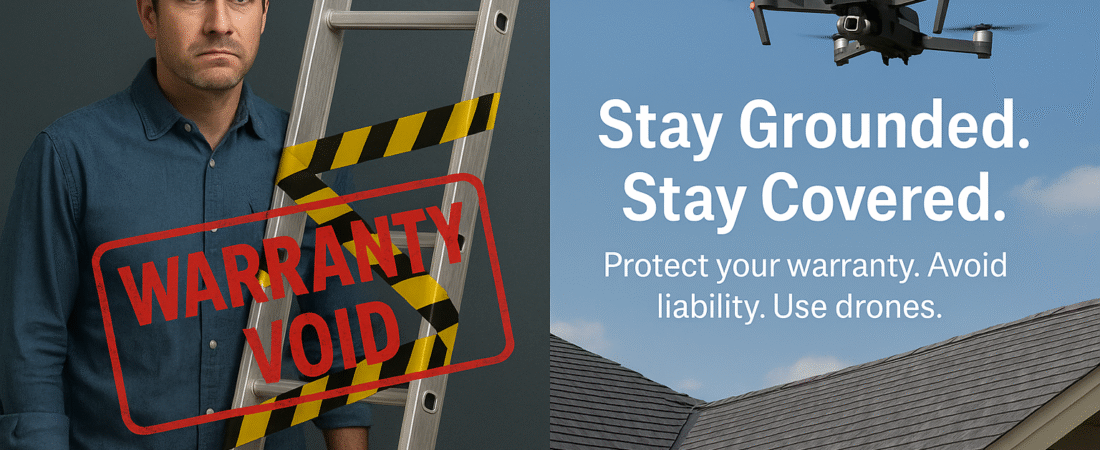
TL;DR — Why This Matters
Most homeowners don’t realize that simply walking on their roof—or hiring the wrong person to do it—can void their roof warranty and expose them to major legal and financial liability. Manufacturers like GAF, Owens Corning, and CertainTeed require that only certified contractors perform maintenance or inspections. Even a well-meaning DIY fix or unauthorized inspection can nullify coverage instantlyRoof Warranty & Liability Conce….
This research explains how unauthorized roof access can lead to denied warranty claims, lawsuits for injuries, and HOA violations, and presents drone inspections as the modern solution. Drones eliminate the need to climb, preventing both warranty voids and fall hazards—effectively turning “No Ladder. No Liability.” from a slogan into a safety standardRoof Warranty & Liability Conce….
If you’re a homeowner, property manager, or contractor, this document helps you understand how to protect your roof warranty, your finances, and yourself—by knowing when to stay off the roof and when to let technology do the work.
Unauthorized access to your roof – whether by you, an unqualified handyman, or any third party not approved by the roof manufacturer – can have serious consequences. It can void your roof’s warranty and expose you (and others) to liability risks if accidents happen. Below, we break down how roof warranties handle unauthorized access and why letting unlicensed individuals on your roof can lead to legal and financial trouble, as well as safer alternatives like drone inspections.
Manufacturer Warranties and Unauthorized Roof Access
Roofing manufacturers offer warranties that come with strict conditions. These warranties (from companies like GAF, Owens Corning, CertainTeed, etc.) require that installation and any repairs or inspections are done by authorized, certified professionals. Engaging in “do-it-yourself” fixes or hiring someone who isn’t approved can void the warranty almost immediately. In fact, many warranties explicitly state that unauthorized repairs or even excessive foot traffic by the homeowner can invalidate coverageroofingcenter.com. The logic is that if someone unqualified tampers with the roof, any damage or defects that result are not the manufacturer’s responsibility. For example, some roofing manufacturers warn that homeowner foot traffic or unapproved repairs will give them reason to deny warranty claimsroofingcenter.com. Simply walking on the shingles can grind off protective granules or cause hidden damage, so manufacturers don’t want owners (or anyone not certified) clambering around up there.
Using non-certified contractors can be just as risky for your warranty. Manufacturers often insist on factory-certified roofers for installation and maintenance. Hiring an unlicensed or uninsured roofer can void manufacturer warranties immediately, regardless of how good a job they doclaremoreroofer.net. This is because roofing companies want to ensure that qualified professionals are handling their products. As a homeowner, it’s crucial to check your warranty documentation – many warranties spell out maintenance requirements, such as periodic inspections by a professional, and prohibit “unauthorized” modificationsclaremoreroofer.net. Skipping a required annual inspection or using an uncertified person to fix a leak might unknowingly nullify your warrantyclaremoreroofer.net.
To illustrate how strict these terms can be, consider GAF’s top-tier warranty: the Golden Pledge Warranty. One unique requirement of GAF’s Golden Pledge is a mandatory inspection by a GAF factory-certified inspector after the roof is installedridgetopexteriors.com. This isn’t just a formality – the inspector checks that the roofing contractor’s work meets GAF’s standards. Only if the roof passes this inspection does the full warranty take effect. This kind of clause shows that manufacturers sometimes require certified inspections (and not just anyone walking on the roof) to keep the warranty valid. In short, to protect your warranty, you should use only authorized, licensed contractors for any roofing work and strictly follow the manufacturer’s guidelines for inspections and maintenance.
Liability Risks of Unlicensed or Unauthorized Roof Access
Allowing an unqualified person on your roof can lead to accidents – and the homeowner may bear the liability.
Beyond warranty concerns, there are serious liability issues if someone gets hurt while on your roof. Roofing work is dangerous – falls from roofs or ladders can cause severe injury. Normally, if you hire a professional roofing contractor who is licensed and insured, they carry insurance for worker injuries. In that case, your homeowner’s insurance might also provide some protection. However, if you let an unlicensed or uninsured individual go up on your roof (perhaps a well-meaning friend or a cheap contractor), you as the homeowner could be held responsible if an accident occurs. Lawyers caution homeowners to “think twice” about letting a neighbor or any unqualified person climb onto your roof, because if that person falls and isn’t covered by insurance, you could be sued for their injuriessimplifiedsafety.com. In other words, the law might treat you as the “employer” of that person on your roof, making you liable for safety.
Even with licensed contractors, liability can sometimes circle back to the homeowner under certain conditions. Generally, homeowners are not automatically liable for contractors’ on-the-job injuries, but there are exceptions. If a homeowner is directly negligent – say, failing to fix a known hazard or actively directing the work in an unsafe way – they could share in the blame for an accidentsimplifiedsafety.com. For instance, if you knew your roof had a rotten section and didn’t warn the contractor, and they fell through, you might be considered negligent. Likewise, if you personally instruct or control how the roofer does the job (essentially acting as a project manager), you could assume liability as a “controlling contractor” in OSHA’s eyessimplifiedsafety.com. The safest course is to reduce your exposure: hire reputable, insured contractors and then let them do their job without interferencesimplifiedsafety.com.
The nightmare scenario is an uninsured individual getting hurt: if, say, a handyman with no workers’ comp falls off your two-story roof, you might end up responsible for all medical bills, lost wages, and more. Homeowner’s insurance might cover some of it, but often not enough, especially if you were negligent. In fact, legal experts note that if a roofer or worker falls off your roof, you as the homeowner may end up assuming liability for part or all of the damages, and you could face a lawsuit to cover the “exorbitant” costs of the injurystoneinjurylawyers.com. This is why vetting anyone who goes on your roof is so critical. Always ask for proof of license and insurance – any hesitation or excuses from a contractor are a red flagsimplifiedsafety.com. And never pay cash under the table to someone to climb up there; the money you save isn’t worth the risk of a liability lawsuit if something goes wrong.
It’s worth noting that Homeowner Associations (HOAs) and condo boards are well aware of these roof risks. Many HOAs actually forbid residents from accessing the roof at all, precisely to avoid liability and roof damage issues. For example, in Florida condominiums it’s “almost always” in the rules that owners are not allowed on the roof because of liability concernshoaleader.com. The HOA itself will handle roof inspections or repairs via professionals. If you live in a condo or townhome with shared roofs, check your association rules – going onto a restricted roof could not only void warranties and risk injury, but also violate your agreement with the HOA. In short, unauthorized roof access is a liability to everyone involved – the homeowner, the association, and the person climbing up there.
Drones and Safer Inspection Alternatives
Given the twin problems of voided warranties and liability from physically climbing on roofs, homeowners and professionals are increasingly turning to safer alternatives for roof inspections. One of the most effective solutions is using drone technology for routine roof checks and documentation. Drone inspections allow a trained operator to **examine the roof’s condition thoroughly without anyone having to set foot on the roof. This has multiple benefits:
- No Risk of Footstep Damage: Because no one is walking on shingles or fragile tiles, there’s no chance of accidental damage that could void your warranty. (Roofs are designed to handle weather, not human weight in random spots.) High-resolution drone cameras can spot issues like cracked shingles, lifted flashing, or hail hits from above. As a result, you get the information you need without compromising the roof’s integrity. Roofing professionals note that drone assessments provide a clear view of the roof **“without stepping foot on it,” identifying damage without any risk of causing new damagecloudroofing.com. In the same vein, commercial facility managers find it valuable that drones offer non-invasive inspections that prevent the wear-and-tear caused by foot traffic on sensitive roofing materialsmyshyft.com.
- Preserving Warranty Compliance: Many warranties require regular inspections and documentation (e.g. an annual check-up, or an inspection after a major storm) to keep coverage in forceclaremoreroofer.net. Drones make it easy to fulfill these requirements. You can schedule periodic drone inspections and have detailed photos/video as proof of your roof’s condition over time. This creates a digital paper trail of proper maintenance. For instance, one facilities guide notes that coordinating inspections (with drones) on a set schedule satisfies roof warranty inspection requirements and maintains proper documentation to protect your warranty coveragemyshyft.com. In essence, you’re doing your due diligence without ever violating the warranty’s “no unauthorized tampering” clause.
- Greatly Reduced Liability: There’s a popular saying in roof safety: “No ladder, no liability.” When you remove the human element of climbing ladders and walking on pitched roofs, you eliminate the primary source of accidents. Drones keep inspectors safely on the ground. Statistics back this up – by keeping workers off the roof, companies have reported virtually zero fall injuries. In fact, according to the National Safety Council, using drones for high-risk inspection tasks can cut workplace accidents by up to 91%, and every accident avoided potentially saves tens of thousands of dollars in medical, legal, and insurance costs. Simply put, every ladder you don’t climb is an accident that can’t happen. By using a drone, “fall risk” goes to zero, which means the homeowner and contractor avoid the enormous liability that would come with a fall. (Not to mention, you’re not risking life and limb just to see if a shingle blew off.)
- Efficiency and Documentation: Modern drone inspection services provide high-quality imagery, infrared scans (to detect leaks or wet spots under the shingles), and even automated reports. You not only get safety and peace of mind, but also a precise record of your roof’s condition. This can be useful if you ever need to make a warranty claim or an insurance claim – you have “before” photos from drone flights to show the condition of the roof prior to any issue. Some insurance companies even offer discounts for regular documented roof inspections, since it indicates proactive maintenance. In the insurance adjuster world, drone roof inspections are now common for quickly assessing storm damage without waiting for an adjuster to climb up. All this means drones can help you catch problems early and fix them under warranty, instead of finding out too late after the warranty is voided.
Of course, drones should be operated by qualified professionals as well – ideally a licensed roof inspector who is also certified under FAA drone regulations. This ensures you get accurate assessments and stay within legal flight rules. Many roofing contractors today offer drone inspection as part of their service. If a drone spots a problem that needs repair, you can then hire a certified roofer to fix it properly (thus keeping your warranty intact). The key is, you avoided the initial risk and only perform physical work on the roof when it’s truly needed and with the right precautions.
Best Practices to Protect Your Roof and Yourself
To sum up the lessons on warranty and liability, here are some best-practice tips for homeowners:
- Use Certified, Insured Contractors: Whether it’s a minor repair or an annual inspection, hire only licensed and insured roofing professionals. Verify that the contractor is factory-certified for your roof brand if possible (e.g. GAF Master Elite for GAF shingles) to keep warranties validclaremoreroofer.net. Always ask for proof of insurance (liability and workers’ comp). This protects you in case of accidentssimplifiedsafety.com.
- Avoid Unauthorized DIY Work: It can be tempting to patch a roof leak yourself or ask a handy friend for help, but remember that unauthorized repairs or modifications can void your warranty and may be unsafe. Don’t nail in that satellite dish or vent pipe without manufacturer approval, and don’t mix in off-brand shingles or materialsclaremoreroofer.netclaremoreroofer.net. When in doubt, call a pro.
- Don’t Walk on the Roof Unnecessarily: Limit roof access to when it’s absolutely necessary. Just walking on the roof can cause damage (cracked tiles, scraped shingles, compressed underlayment) that might not be covered by warranty. Some warranties actually exclude damage from “foot traffic.” If you need to check the roof, use binoculars or a drone, or call for a professional inspection rather than going up yourselfroofingcenter.comcloudroofing.com.
- Follow Maintenance Guidelines: Adhere to the maintenance schedule recommended by your roof manufacturer. This often means periodic inspections (every 1-2 years) and prompt upkeep of things like ventilation and gutter cleaning. Keep records of all inspections, maintenance, and repairsclaremoreroofer.net. If a problem arises, that documentation shows you upheld your end of the warranty terms.
- Leverage Drone Inspections: Consider scheduling drone inspections for routine check-ups, especially after major weather events. Drones can capture detailed images of any damage without risk. The documented findings from drone surveys can be used to facilitate warranty claims or to decide if you need a contractor to come for repairsmyshyft.comcloudroofing.com. It’s a tech-savvy way to stay on top of roof health without voiding warranty or risking accidents.
- Know Your HOA/Condo Rules: If you live in a community with an HOA or a condo association, be aware of any roof access restrictions. Often, owners are prohibited from going on shared roofs for safety and liability reasonshoaleader.com. Violating these rules could not only put you at personal risk but also make you financially responsible for any resulting damage or injury. Always coordinate with your HOA for roof issues – they may send an approved contractor.
- Obtain Liability Waivers: When you do hire anyone to work on your roof, especially independent contractors, have a written contract or liability waiver in place. This document should state that the contractor has their own insurance and that you, the homeowner, won’t be held liable for injuries or accidents. While a waiver isn’t a 100% shield, it’s an extra layer of protection (and a signal that the contractor acknowledges the risks)stoneinjurylawyers.com. Reputable contractors won’t object to this.
By following these practices, you’ll minimize the chance of voiding your roof’s warranty and significantly reduce the likelihood of a costly liability incident. Your roof will remain eligible for manufacturer coverage when you need it, and anyone working on it will be properly protected. In summary: keep unqualified people off your roof, and when in doubt, bring in the pros (or the drones). It will save you many headaches in the long run, both financially and in terms of safety.
Conclusion
Roof warranties and liability issues are deeply intertwined with one principle: only authorized, qualified individuals should access your roof. Climbing onto a roof might seem harmless, but it can void important warranty protections in an instant and put you at risk of lawsuits or injury. Manufacturers design their warranties on the assumption that professionals, not homeowners or random handymen, will handle the roof. Likewise, the law expects homeowners to exercise caution and due diligence for any dangerous work on their property. The good news is that with the right approach – using certified contractors, abiding by warranty rules, and leveraging technology like drone inspections – you can care for your roof without jeopardizing your coverage or safety. Protect your investment (and yourself) by staying off the roof unless absolutely necessary, and your reward will be a long-lasting roof with its warranty – and your peace of mind – intact.
Sources:
- Roofing Center – “What Every Homeowner Should Know Before Climbing on Their Roof,” highlighting that manufacturers warn homeowner foot traffic or unauthorized repairs can void warrantiesroofingcenter.com.
- Claremore Roofer – Essential Maintenance Guide to Avoid Voiding Coverage, noting that hiring unlicensed or non-certified roofers voids most manufacturer warrantiesclaremoreroofer.net and that skipping required professional inspections can nullify warranty protectionclaremoreroofer.net.
- Ridge Top Exteriors – GAF Golden Pledge Warranty details, confirming it mandates a GAF-certified inspector to sign off on the installation for the warranty to be validridgetopexteriors.com.
- Simplified Safety (Fall Protection Blog) – “Who is Liable for Contractors on My Roof,” explaining that homeowners should insist on licensed, insured contractors and avoid letting uninsured neighbors on the roof, to reduce liability exposuresimplifiedsafety.comsimplifiedsafety.com.
- Jason Stone Injury Lawyers – “Who is liable if a roofer falls off my roof?” describing scenarios where a homeowner may be held liable for a roofer’s injuries (e.g. if the worker isn’t insured or homeowner was negligent) and advising legal protection stepsstoneinjurylawyers.com.
- HOAleader.com – “HOA Rules for Rooftop Decks,” noting that many associations ban owners from roof access entirely due to liability concernshoaleader.com.
- Cloud Roofing – “Does Walking on Your Roof Damage It?” article recommending drone assessments to spot roof issues without stepping on the roof, thus avoiding damage and safety riskscloudroofing.com.
- Shyft Commercial Drone Inspections – emphasizing that scheduled drone inspections can meet warranty requirements and document roof conditions methodically, keeping warranty coverage intactmyshyft.com. Also emphasizes the non-invasive nature of drones, preventing foot-traffic damage to the roofmyshyft.com.
- “No Ladder. No Liability.” – safety data indicating that using drones for inspections eliminates fall hazards, drastically reducing workplace injuries (up to 91% fewer accidents) and associated costs. This underlines how removing physical roof access improves safety and lowers liability for all parties involved.