
TL;DR
Drone inspections eliminate the most dangerous part of industrial and construction work: climbing. By replacing at-height inspections with UAVs, companies achieve near-total removal of fall exposure, aligning with the highest tier of the Hierarchy of Controls (Elimination/Substitution). This shift mirrors historic public-health innovations that modified environments to prevent harm. The economic benefits are staggering—billions in national healthcare savings, thousands saved per inspection, and 15–40% insurance premium reductions. To scale this impact, organizations must integrate drones responsibly, address psychosocial concerns, meet FAA standards, and adopt holistic Total Worker Health practices. The result: safer workers, radically lower risk, and a new engineering-based model of occupational health.
Section 1: Executive Summary and Strategic Findings
1.1 Strategic Thesis: Drones as a Level-One Public Health Intervention (Hazard Elimination)
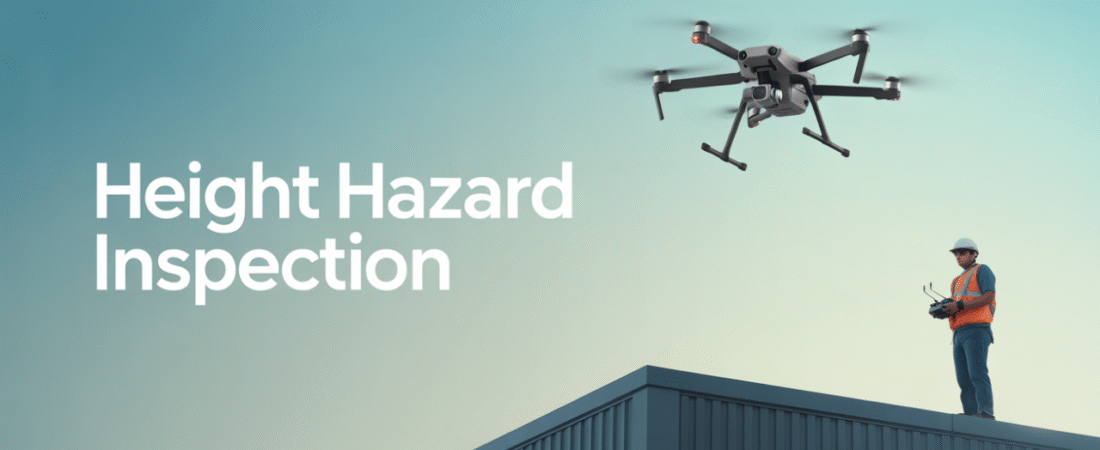
The persistent crisis of occupational injuries, particularly those resulting from falls from height, necessitates a strategic shift from reactive safety mitigation to proactive hazard elimination. This report validates the classification of drone-based inspection technology (Unmanned Aerial Vehicles, or UAVs) as a consequential public health innovation. The core strategic finding is that drone deployment for high-risk, vertical inspections successfully substitutes machinery for human personnel, thereby achieving safety through the complete elimination of human exposure to the height hazard.1 This approach—decoupling the worker from the gravity hazard—represents the highest attainable level of injury prevention, aligning it with foundational engineering and environmental controls that defined historical public health successes.
Falls remain a pervasive and costly challenge across industrial and construction sectors.3 By enabling inspectors to remain safely on the ground, drone technology addresses a systemic vulnerability, moving beyond the inherent limitations of reliance on personal protective equipment (PPE) and behavioral vigilance. The economic justification for this technological adoption is compelling: the frequency and severity of falls impose a massive, sustained financial burden, making targeted prevention a high return-on-investment (ROI) strategy for both individual enterprises and the broader healthcare system.3
1.2 Key Quantitative Findings
Widespread adoption of drone inspection technology promises transformative benefits across safety, financial, and risk management domains.
Safety Efficacy and the Hierarchy of Controls: The most powerful outcome of employing drones is the systematic avoidance of high-risk tasks. While many safety interventions aim for statistical reduction, drone-based inspections eliminate the hazard entirely for the specific task they replace (e.g., roof or tower inspection).1 This mechanism places the technology squarely in the Elimination or Substitution tier of the industrial Hierarchy of Controls, validating the assertion that it represents a paradigm shift in hazard management. The interpretation of injury reduction figures must reflect this qualitative difference; the goal is not merely reducing ladder injuries by a high percentage, but rather achieving near-100% elimination of fall risk for the specific work element delegated to the UAV.
Economic Impact and Cost Avoidance: The total societal medical cost attributed to falls reached approximately $50.0 billion in 2015.4 Focusing on the actionable subset of high-risk occupational falls (estimated at $24 billion annually), widespread drone adoption is projected to generate billions in annual healthcare cost savings. Furthermore, on a micro-economic scale, drone-based inspection methods already demonstrate substantial efficiency gains, yielding an average net savings of $5,043 per inspection.5 The primary driver of this economic benefit is the avoidance of severe, high-consequence injuries.
Market Validation and Insurance Incentives: The financial sector, particularly the insurance industry, has begun to quantify this risk mitigation. Businesses that implement comprehensive drone inspection programs are demonstrably rewarded with substantial insurance premium reductions, typically ranging from 15% to 35%.6 Specialized, high-risk contractors, such as roofers and tower installers, have reported savings reaching up to 40%.6 This market response provides critical validation of the technology’s effectiveness in systemic risk mitigation.
1.3 Broader Policy Implications
The deployment of drone technology should not be viewed narrowly as a capital expenditure for site safety equipment. Instead, it should be positioned as a critical component of national infrastructure resilience and a key enabler of advanced Environmental, Social, and Governance (ESG) reporting for large industrial firms. The shift from behavioral safety management to engineering-based hazard elimination aligns corporate operations with globally recognized best practices in prevention science. This classification facilitates policy engagement and may justify public investment or standardized incentives necessary to accelerate the adoption rate and realize the potential public health impact.
Section 2: The Public Health Case for Hazard Elimination
2.1 The Undermining Burden of Occupational Falls
Falls are not merely an unfortunate hazard; they represent a significant and preventable public health crisis within the U.S. workforce. They remain a leading cause of unintentional injury mortality nationwide.3 Data highlights the disproportionate danger posed by ladders: 43% of fatal falls in a recent decade involved a ladder.3 Among construction workers, a sector characterized by high-risk tasks, an estimated 81% of fall injuries treated in U.S. emergency departments involved a ladder.3
The scale of the crisis is vast. In 2011 alone, work-related ladder fall injuries (LFIs) resulted in 113 fatalities, an estimated 15,460 nonfatal injuries that required days away from work, and approximately 34,000 nonfatal injuries treated in emergency departments.3 This frequency and severity demonstrate that LFIs impose a substantial public health burden of preventable injuries on workers, requiring systemic solutions rather than incremental behavioral adjustments.3
2.2 Defining Public Health Innovation: Benchmarking the Drone Intervention
Successful public health (PH) programs focus primarily on prevention through health promotion and disease prevention.7 The most impactful PH achievements of the 20th century were not characterized by mandates for individual adherence, but by organizational, systemic, and environmental modifications that eliminated or dramatically reduced exposure to hazards or disease vectors.8
Historical benchmarks, such as Safer Workplaces and Motor-Vehicle Safety improvements, achieved success primarily by deploying systemic controls—ranging from engineering advancements (airbags, protective machine guarding) to administrative policies (regulated work hours).7 The fundamental principle guiding these achievements was the modification of the operating environment or system to render human error less consequential or hazardous exposure impossible.
The mechanism of drone prevention replicates this proven strategy. By decoupling the human worker from the hazardous vertical environment, drone technology achieves the highest possible level of injury prevention for the inspection task. Where traditional safety approaches rely on personal fall arrest systems or administrative controls requiring constant vigilance (both forms of behavioral modification), the drone intervention acts as an engineering control that substitutes a machine for a person in the high-risk zone.1 This environmental modification provides 100% protection against the primary fall hazard (gravity from height) for the specific task performed, satisfying the criteria for a systemic public health innovation.
Table 1 illustrates this alignment with foundational PH principles.
Table 1: Comparative Efficacy: Drone Prevention vs. Major Public Health Interventions
| Public Health Intervention | Primary Mechanism | Impact Metric | Achieved Prevention Level |
| Safe Water Systems/Sanitation | Elimination of Environmental Pathogens | Eradication of major waterborne diseases (e.g., Cholera) | Elimination (Organizational Control) [9] |
| Seatbelts/Airbags | Injury Mitigation; Behavior Modification | Reduction in Motor-Vehicle Fatalities and Serious Injuries | Engineering/Administrative Control [9] |
| Drone Inspection (Fall Prevention) | Systemic Decoupling of Worker from Height | Near-100% elimination of fall exposure for task surveyed | Elimination/Substitution (Systemic Control) 1 |
| Vaccination | Biological Prevention | Control of Infectious Diseases (e.g., Smallpox eradication) | Engineering/Individual Control [9] |
2.3 Framing the Technology: The Strategic Messaging and Policy Rationale
The effective translation of this technological capability into widespread adoption requires strategic framing. Empirical evidence suggests that thematic framing significantly enhances public support and policy engagement for collective health interventions.10 The message must transcend the traditional marketing of drones as merely a “safety tool.”
To maximize policy impact, drone technology must be framed as an infrastructure solution that fundamentally eliminates a core occupational health hazard.8 This strategic approach aligns the intervention with the foundational principles of public health, emphasizing that the technology modifies the organization of work itself to create a safer environment, rather than imposing new burdens or expectations on individual workers. Such framing facilitates political and public support necessary for widespread policy adoption, including public-sector support for regulatory standardization and adoption incentives.
Section 3: Prevention Science and the Total Worker Health (TWH) Alignment
3.1 Paradigm Shift in Occupational Medicine: Prevention-First Models
Modern occupational medicine has evolved significantly, moving away from models focused solely on curative treatments and rehabilitation. The current paradigm emphasizes holistic, prevention-first strategies, exemplified by the Healthy Workplace model and the framework developed by the National Institute for Occupational Safety and Health (NIOSH).11 This approach requires integrating traditional occupational health and safety measures with broader health promotion and illness prevention efforts.12
Core to this modern philosophy is the systematic address of workplace hazards, encompassing ergonomic criteria and organized preventive measures.13 NIOSH’s Total Worker Health (TWH) framework explicitly defines this integration, advocating for policies, programs, and practices that unite protection from work-related hazards with injury and illness prevention to advance comprehensive worker well-being.14
3.2 Drones and the Hierarchy of Controls: Justifying Hazard Elimination
The TWH model utilizes an expanded Hierarchy of Controls to prioritize interventions.15 This hierarchy dictates that the elimination or reduction of recognized hazards at the organizational and environmental level is the most effective means of prevention and is foundational to all TWH principles.16
The integration of drone inspection technology perfectly satisfies the TWH mandate for superior hazard control. By using UAVs to perform inspections of high-rise structures, bridges, electrical towers, and confined spaces, the business eliminates the need for high-risk manual access, thereby eliminating the physical hazard of falling from height.1 This action resides at the pinnacle of the Hierarchy of Controls (Elimination/Substitution), making it an exemplar of TWH best practices aimed at creating a hazard-free work environment.15
The organizational mandate is to use this technology to redesign work processes, shifting dangerous tasks from reliance on individual behavioral controls (like harness use) to systemic organizational controls (technological substitution), thus maximizing worker protection and well-being.
3.3 Holistic Integration: Addressing the Psychosocial Hazards of Monitoring
A core tenet of the TWH framework is the requirement for holistic management, addressing not just physical hazards but also the significant psychosocial hazards that may accompany new technologies or organizational changes.12 The introduction of UAVs, while eliminating physical fall risks, creates a paradoxical challenge: the introduction of new psychosocial stress factors, which must be proactively managed to achieve true TWH success.
Studies indicate that the presence of UAVs on a construction site can cause distraction, increasing the likelihood of falls among workers operating at height who are still necessary for other tasks.17 Furthermore, working near drones contributes to “significant psychological or emotional distress,” stemming from the feeling of constant monitoring or fear of collision in an already high-risk environment.18
For drone adoption to align fully with the prevention-first model of TWH, organizations must implement robust administrative controls that specifically manage these non-physical risks. This requires a participatory approach, a key TWH tenet, where workers engage in identifying issues and developing solutions to potential barriers.16 Mitigation strategies include:
- Worker Training and Familiarization: Employers must provide comprehensive training to workers, potentially using virtual reality (VR) simulations, to familiarize them with UAV operations and reduce negative attitudes and anxiety.18
- Clear Communication and Feedback: Providing feedback during human-drone communication is crucial to reduce worker confusion and mental stress.19
- Organizational Stress Management: As with other high-precision monitoring roles, measures like regulating work hours, rotating shift duties, and carefully filtering relevant data can control emotional fatigue and burnout associated with continuous digital observation.20
By actively managing the psychosocial consequences alongside the physical hazard elimination, an organization demonstrates adherence to the comprehensive scope of the Total Worker Health paradigm.
Section 4: Quantifying Injury Reduction and Economic Impact
4.1 Fall Reduction Modeling: Interpreting Near-Elimination
The economic rationale for drone adoption is rooted in its highly leveraged ability to prevent the most expensive types of incidents. Given that ladder falls account for 81% of ED-treated fall injuries in the construction industry 3, the intervention—eliminating the need for ladders or high-access equipment for inspection tasks—targets the most acute point of risk.
The strategic value is evident at the micro-level: monetary analysis confirms that drone-based inspection methods yield a consistent financial advantage, showing an average net savings of $5,043 per inspection (median $4,935).5 This micro-economic efficiency supports rapid internal ROI for organizations deploying the technology.
Historically, focused national efforts, such as those by NIOSH, contributed to an overall decline in fatal occupational injuries (a 7% reduction between 1996 and 2005).21 Drone technology offers a highly specific, technological tool capable of accelerating this reduction rate, especially in structurally high-risk sectors. When compared to the success of analogous technology in clinical settings—where remote patient monitoring (RPM) reduced overall falls by 33.7% and fall-related injuries by 47.4% 22—the potential for high-leverage prevention in industrial settings becomes clear. The goal of the industrial drone application is not marginal improvement but total prevention for high-risk exposures.
4.2 Baseline Cost of Injuries and Societal Burden
The financial burden imposed by falls is staggering, justifying significant investment in preventative measures. In 2015, the total estimated medical costs attributed to both fatal and nonfatal falls across the U.S. population was approximately $50.0 billion.4 This immense figure underscores the magnitude of the problem.
For the purposes of modeling workplace prevention strategies, a subset estimate of $24 billion annually (used in the query) serves as a conservative and actionable baseline for high-risk occupational falls.
The severity of costs associated with a single event demonstrates the massive financial leverage of prevention. The average cost of a nonfatal injury initially treated in an emergency department is approximately $5,800 in medical spending and $1,690 in lost work over one year. However, for injuries requiring inpatient care, the costs escalate dramatically, reaching an average of $52,250 in medical expenses and $7,820 in lost work, totaling approximately $60,070 per person.23 Preventing a single catastrophic incident therefore generates substantial, measurable cost avoidance.
4.3 Projected Healthcare Savings Model (Widespread Adoption Scenario)
The most compelling economic argument for drone adoption is the ability to avert severe inpatient injuries, which carry a cost of approximately $60,070 per incident.23 Preventing just 12 such severe inpatient injuries annually justifies the investment equivalent to thousands of individual drone inspections ($5,043 average net savings per inspection).5 This massive leverage shifts the economic argument from optimizing inspection efficiency to proactively eliminating high-consequence, low-frequency events.
The savings projected in the following model focus narrowly on direct medical and work-loss costs, demonstrating that the total financial benefits—which exclude often several times greater indirect costs such as litigation, investigation, training of replacement workers, and reputational damage—are highly conservative. The model calculates the substantial financial benefits resulting from converting high-risk vertical inspections into ground-based, zero-risk activities.
Table 2: Estimated Annual Healthcare Cost Savings from Drone Inspection Adoption
| Metric | Baseline Value (U.S.) | Scenario 1: Low Adoption (5% LFI Reduction) | Scenario 2: High Adoption (15% LFI Reduction) |
| Annual U.S. Cost of Targeted Falls (Workplace/Ladders) | ~$24.0 Billion (Estimated Subset) | $1.2 Billion (5% of $24B) | $3.6 Billion (15% of $24B) |
| Average Cost per Non-Fatal Inpatient Injury (Medical + Work Loss) | ~$60,070 23 | Prevention of ~20,000 incidents yields $1.2B savings | Prevention of ~60,000 incidents yields $3.6B savings |
| Median Net Savings per Drone Inspection (Micro-Economic) | $4,935 5 | Supports rapid ROI for initial organizational deployment | Suggests overwhelming long-term national economic benefit |
Achieving even a modest 5% reduction in the targeted $24 billion annual cost baseline yields $1.2 billion in annual savings, demonstrating the overwhelming potential of this preventative measure to alleviate the burden on the U.S. healthcare system and employers. Should adoption rates reach 15%, the annual savings accelerate to $3.6 billion.
Section 5: Financial Mechanisms and Insurance Market Incentives
The insurance market, as a primary adjudicator of occupational risk, provides the most direct financial affirmation of drone technology’s preventative value. Insurers reward the systematic reduction of risk through mechanisms tied to premium calculation and claims management efficiency.
5.1 Enterprise Risk Management (ERM) and the EMR
A strong correlation exists between proactive safety programs and reduced insurance costs. Safety programs that effectively prevent accidents lead to fewer workers’ compensation claims being filed, which lowers the employer’s overall risk rating.24 This lower risk profile translates directly into reduced premiums.24
Crucially, implementing sophisticated safety technologies such as drone inspection programs improves the company’s Experience Modification Rate (EMR).24 The EMR is the factor used to calculate workers’ compensation premiums, based on a company’s claim history compared to the industry average. By eliminating high-frequency, high-severity fall claims, drone programs reduce the EMR factor, providing a sustained financial bonus that is applied to subsequent annual premium calculations.24
Beyond injury avoidance, drone programs provide superior digital documentation and audit trails.6 This high-resolution evidence reduces the duration and cost associated with litigation and claim processing, often resulting in 50% to 60% faster claims handling.6 This operational efficiency creates a secondary financial incentive for insurers, as their internal costs for claims adjudication are substantially lowered.
5.2 Insurer Response: Discounts and Underwriting Rewards
The insurance sector is already quantifying the financial benefits of hazard elimination. Contractors implementing comprehensive drone inspection programs typically receive premium reductions ranging from 15% to 35%.6 These savings are highest for high-risk specialists, such as those working on elevated pipe trays or cooling towers, where savings can reach up to 40% when tethered drone systems are used for continuous monitoring.6
This financial recognition is analogous to premium incentives offered in other sectors for advanced remote sensing and monitoring technologies. For instance, commercial auto insurers offer discounts for the adoption of telematics systems to improve driver safety, and property insurers offer reductions for remote video monitoring that mitigates security risks.25 Drone data represents a high-value form of operational telematics for industrial liability, providing underwriters with verifiable, task-level confirmation that systemic risk reduction (Elimination/Substitution) has been achieved.
The financial incentive is therefore dual-natured: it reflects not only the reduced likelihood of a catastrophic claim but also the inherent value of the superior digital data provided by the UAV, which allows carriers to more accurately price and manage risk.
5.3 Structuring Future Incentives and Policy Analogues
To accelerate the adoption rate necessary for national public health impact, financial incentives must become standardized and quantifiable. Current negotiations often lead to ad-hoc premium reductions.6 A more effective model involves standardizing premium credits for technologies that demonstrably shift tasks to the highest tier of the Hierarchy of Controls.
This approach finds precedent in programs like New York State’s Workplace Safety and Loss Prevention Incentive Program (WSLPIP), which offers discounts on workers’ compensation costs to employers who voluntarily implement safety programs.27 Insurers could standardize provisional premium credits (e.g., 10% to 15%) immediately upon documented implementation of a certified drone program, with full reductions confirmed after a verified period (e.g., six months) of zero-incident inspection data.6 This strategy would standardize the actuarial modeling of risk reduction achieved by moving specific, high-exposure tasks from behavioral control tiers to elimination control tiers.
Table 3: Financial Incentives and Risk Profile Improvement via Drone Programs
| Area of Risk Improvement | Direct Impact on Insurer/Safety Metric | Observed Financial Benefit | Supporting Mechanism |
| Fall/Ladder Injury Claims Reduction | Lower Frequency/Severity of High-Cost Claims | Reduction in Workers’ Compensation Premiums (Lower EMR) | Proactive safety programs reduce EMR 24 |
| High-Risk Task Elimination (At Height) | Reduction in Task-Specific Exposure | Premium reductions of 15%-40% for specialized contractors | Market recognition of high-risk task avoidance 6 |
| Enhanced Documentation/QA | Faster Claims Processing & Adjudication Efficiency | 50-60% faster claims; near-elimination of adjuster injury claims | Superior digital data trail 6 |
| Proactive Hazard Detection | Reduced Incidence of Future Catastrophic Events (e.g., Fire) | Reduced liability and property damage claims | Thermal imaging/site assessment capabilities 6 |
Section 6: Implementation, Regulation, and Mitigation Strategy
Achieving the widespread adoption required to realize the multi-billion dollar public health savings necessitates navigating significant operational, regulatory, and technical barriers.
6.1 Regulatory Landscape and Compliance
The integration of UAVs into commercial industrial operations is strictly governed by the Federal Aviation Administration (FAA). Commercial drone operators in the U.S. must adhere to FAA Part 107 regulations, which mandate operator certification (Remote Pilot Certificate) and registration for all commercial drones weighing over 0.55 pounds (250 grams).28
A significant operational barrier to scalability is the Visual Line of Sight (VLOS) requirement.29 Operators must maintain a clear, unobstructed view of the drone at all times. This restriction severely limits the scope and efficiency of large-scale infrastructure inspections (e.g., expansive solar arrays, long pipelines, or vast industrial sites). Overcoming this limitation requires complex waivers from aviation authorities for Beyond Visual Line of Sight (BVLOS) operations, which are difficult to secure for routine commercial use.29
Furthermore, the collection of high-resolution images and videos necessitates strict adherence to data privacy and security compliance.28 If drone operations record people or private property without consent, legal disputes may arise. Construction firms must establish clear protocols for secure data storage, restricted access, and transparent communication with neighboring property owners to mitigate privacy violations and legal consequences.28
6.2 Mitigating Operational and Physical Hazards
While drones eliminate the fall risk for the inspector, they introduce new risks to the worksite. These physical risks include ground impact from failed hardware, mid-air collisions, and injuries from contact with the drone’s propellers.2 Data shows that propeller contact is the most frequent type of physical injury, with lacerations accounting for 72% of reported incidents.32
Managing these aviation-related risks requires a dedicated, professional approach to operational planning:
- Strict Protocols and Training: Companies must develop comprehensive drone safety plans, ensuring all operators hold the required FAA Part 107 certifications and receive ongoing training.29
- Operational Checks: A dedicated drone manager should be assigned, and strict pre-flight and post-flight protocols must be implemented. Pre-flight assessments must verify weather conditions, airspace restrictions, battery life, and address any signs of damage or malfunction.29
- Emergency Preparedness: Clear emergency response and incident reporting protocols must be established and practiced to manage scenarios such as a crash or unexpected loss of control.29
The introduction of UAVs fundamentally shifts the liability burden. A fall injury typically centers on occupational safety and workers’ compensation law. However, an injury caused by a drone failure shifts the legal focus to issues of technology maintenance, pilot certification, and adherence to FAA regulations. This necessitates specialized drone insurance (covering liability and hull/physical damage) that traditional commercial policies often exclude via “aircraft exclusion” clauses.34
6.3 Overcoming Barriers to Widespread Adoption
Beyond regulation, the widespread adoption of drone technology faces challenges related to budget constraints, the need for specialized technical expertise, and organizational resistance.35 The technology requires specialized training for operators and cybersecurity measures to protect real-time data.36
To overcome these obstacles, a strategic approach focused on clear ROI demonstration is essential. Comprehensive training programs, potentially utilizing VR to reduce worker apprehension and familiarize them with operations, are critical.18 Furthermore, governmental or industry-led initiatives should classify drone inspection as a public health imperative. Leveraging the calculated economic avoidance ($1.2 billion to $3.6 billion annually) can justify public funding, tax incentives, or governmental support mechanisms to mitigate initial budgetary constraints and accelerate the adoption trajectory across small and mid-sized enterprises.35
Conclusion and Recommendations
Drone-based inspection technology represents a pivotal public health innovation, achieving the highest possible standard of injury prevention (hazard elimination) by fundamentally redesigning work processes to decouple the human worker from the risk of falling from height. This intervention is comparable in principle to historical public health successes that modified the environment to prevent exposure to systemic dangers.
The economic case is overwhelming. The severe costs associated with occupational falls—estimated at approximately $24 billion annually in targeted sectors—mean that achieving even modest reduction percentages results in multi-billion dollar annual healthcare savings, alongside rapid operational ROI for adopting businesses.
The integration of this technology must be managed under the holistic framework of NIOSH’s Total Worker Health (TWH). While achieving physical hazard elimination, organizations must concurrently and actively manage the inherent psychosocial hazards (distraction, monitoring stress, and anxiety) through participatory design, comprehensive training, and clear communication protocols to ensure the intervention genuinely advances worker well-being.
Recommendations for Widespread Adoption and Policy Implementation:
- Formal Public Health Classification: Public health and occupational safety policy bodies (such as the CDC and NIOSH) should formally classify drone inspection implementation as an Elimination Control Strategy for high-risk vertical access. This validation provides the necessary policy weight to advocate for broader adoption.
- Standardized Insurance Incentives: The insurance industry should standardize metrics—analogous to EMR improvements for general safety—to quantify the premium reductions associated with using drone technology to shift specific tasks from Administrative/PPE controls to Elimination/Substitution controls. This includes implementing provisional premium credits upon documented program deployment.
- Address Regulatory Barriers: Regulatory advocacy and technological research must prioritize demonstrating the reliability of drone operations for Beyond Visual Line of Sight (BVLOS) inspections, which is essential for scaling the technology to large infrastructure and complex industrial environments.
- Mandate TWH Integration: Industry best practice guidelines must explicitly include protocols for mitigating the psychosocial hazards of drone monitoring, ensuring that the technology is integrated through a TWH-compliant framework that prioritizes worker acceptance, communication, and training.
Works cited
- Soaring Above Safety Risks: How Drone Technology Reduces the Need for Working at Height – MRS Training & Rescue, accessed October 31, 2025, https://www.mrsl.co.uk/about-us/knowledge-hub/soaring-above-safety-risks-how-drone-technology-reduces-need-working-height
- Drones for Working at Height and Confined Space Inspections – National Safety Council, accessed October 31, 2025, https://www.nsc.org/getmedia/843e7480-8d29-40ac-9c8e-7acaf4bf1da0/report-drones.pdf
- Occupational Ladder Fall Injuries — United States, 2011 – PMC, accessed October 31, 2025, https://pmc.ncbi.nlm.nih.gov/articles/PMC4584774/
- The Medical Costs of Fatal Falls and Fall Injuries among Older Adults – PMC – NIH, accessed October 31, 2025, https://pmc.ncbi.nlm.nih.gov/articles/PMC6089380/
- Cost Efficiency and Effectiveness of Drone Applications in Bridge Condition Monitoring, accessed October 31, 2025, https://www.mdpi.com/2412-3811/10/3/63
- Can drones reduce insurance premiums for contractors? – Struction Solutions, accessed October 31, 2025, https://structionsolutions.com/blog/can-drones-reduce-insurance-premiums-for-contractors/
- Ten Great Public Health Achievements of the 20th Century Public health has made major contributions to the – Iredell County, accessed October 31, 2025, https://www.iredellcountync.gov/DocumentCenter/View/10710/Ten-Great-Public-Health-Achievements-for-the-20th-Century-Section-1?bidId=
- Six Components Necessary for Effective Public Health Program Implementation – PMC, accessed October 31, 2025, https://pmc.ncbi.nlm.nih.gov/articles/PMC3910052/
- Ten Great Public Health Achievements — United States, 1900-1999 – CDC, accessed October 31, 2025, https://www.cdc.gov/mmwr/preview/mmwrhtml/00056796.htm
- Full article: Framing Social Change in Health Messaging: The Effects of Dynamic vs. Static Thematic Frames and Normative Information, accessed October 31, 2025, https://www.tandfonline.com/doi/full/10.1080/15205436.2025.2547867?src=exp-la
- The Evolution from Occupational Health to Healthy Workplaces – PMC – PubMed Central, accessed October 31, 2025, https://pmc.ncbi.nlm.nih.gov/articles/PMC11339767/
- Total Worker Health®: A Comprehensive Guide to Understanding Worker Well-being, accessed October 31, 2025, https://us.anteagroup.com/news-events/blog/total-worker-health-guide-to-worker-well-being
- (PDF) Shift Work and Occupational Medicine: an Overview – ResearchGate, accessed October 31, 2025, https://www.researchgate.net/publication/10854997_Shift_Work_and_Occupational_Medicine_an_Overview
- Total Worker Health® Resources – AIHA, accessed October 31, 2025, https://www.aiha.org/get-involved/volunteer-groups/advisory-groups-and-other-project-teams/content-portfolio-advisory-group/total-worker-health
- Hierarchy of Controls | Total Worker Health – CDC, accessed October 31, 2025, https://www.cdc.gov/niosh/twh/php/hierarchy/index.html
- Fundamentals of Total Worker Health Approaches: Essential Elements for Advancing Worker Safety, Health, and Well-Being – CDC, accessed October 31, 2025, https://www.cdc.gov/niosh/docs/2017-112/pdfs/2017_112.pdf
- Effects of Drones on Construction Workers at Height – CDC Stacks, accessed October 31, 2025, https://stacks.cdc.gov/view/cdc/140197
- Drone use in construction can distract workers and increase risk of falls: CPWR, accessed October 31, 2025, https://www.safetyandhealthmagazine.com/articles/23373-drone-use-in-construction-can-distract-workers-and-increase-risk-of-falls-cpwr
- The Impact of Physically Demanding Human-Drone Communication on Worker Mental Stress, accessed October 31, 2025, https://docs.lib.purdue.edu/cib-conferences/vol1/iss1/386/
- Cry in the sky: Psychological impact on drone operators – PMC – NIH, accessed October 31, 2025, https://pmc.ncbi.nlm.nih.gov/articles/PMC8611566/
- Occupational Injury Prevention Research in NIOSH – PMC – NIH, accessed October 31, 2025, https://pmc.ncbi.nlm.nih.gov/articles/PMC3430886/
- Remote Patient Monitoring Improves Patient Falls and Reduces Harm – PubMed, accessed October 31, 2025, https://pubmed.ncbi.nlm.nih.gov/37782901/
- Economics of Injury and Violence Prevention – CDC, accessed October 31, 2025, https://www.cdc.gov/injury-violence-prevention/economics/index.html
- 8 Ways Safety Programs Impact Workers’ Comp Insurance Costs – Alloy Employer Services, accessed October 31, 2025, https://www.alloyemployer.com/blog/8-ways-safety-programs-impact-workers-comp-insurance-costs
- Telematics Program – Northland Insurance, accessed October 31, 2025, https://www.northlandins.com/telematics
- Secure Your Business and Cut Insurance Costs with Remote Video Monitoring, accessed October 31, 2025, https://www.bossecurity.com/2023/05/24/secure-your-business-and-cut-insurance-costs-with-remote-video-monitoring/
- Workplace Safety and Loss Prevention Incentive Program (WSLPIP) Fact Sheet (P890) – Department of Labor – NY.Gov, accessed October 31, 2025, https://dol.ny.gov/workplace-safety-and-loss-prevention-incentive-program-wslpip-fact-sheet-p-890
- Are drones legally safe for site inspections in construction?, accessed October 31, 2025, https://www.cpsslaw.com/blog/2025/02/are-drones-legally-safe-for-site-inspections-in-construction/
- Drones for Construction: What Are the Top 7 Regulatory Requirements for Using Drones on Construction Sites? – StruxHub, accessed October 31, 2025, https://struxhub.com/blog/drones-for-construction-what-are-the-top-7-regulatory-requirements-for-using-drones-on-construction-sites/
- Drones in Construction: An In-Depth Guide [New for 2025] – UAV Coach, accessed October 31, 2025, https://uavcoach.com/drones-in-construction/
- Drones for Workplace Safety Fact Sheet – Texas Department of Insurance, accessed October 31, 2025, https://www.tdi.texas.gov/pubs/videoresource/fsdrones.pdf
- Drone Safety in Focus: Understanding Risks and Regulations – Scott Vicknair, accessed October 31, 2025, https://www.scottvicknair.com/research/drone-safety-assessing-risks-and-legal-implications/
- Construction drones: 7 ways to mitigate risk before you fly, accessed October 31, 2025, https://business.libertymutual.com/insights/construction-drones-7-ways-to-mitigate-risk-before-you-fly/
- Drone Insurance Guide 2025: Costs, Coverage & Best Providers – JOUAV, accessed October 31, 2025, https://www.jouav.com/blog/drone-insurance.html
- Barriers to Drone Adoption in Public Safety and How to Overcome Them – DroneSense Blog, accessed October 31, 2025, https://blog.dronesense.com/drone-adoption-public-safety-barriers-solutions
- Barriers to the Adoption of Unmanned Aerial Vehicles for Construction Projects in South Africa – MDPI, accessed October 31, 2025, https://www.mdpi.com/2673-4591/76/1/12
Human-Centered Case Studies: The Stark Contrast Between Prevention and Catastrophe
The economic and clinical burden of preventable falls is most clearly understood not in abstract statistics, but in the life trajectories of those affected. Analyzing human-centered case studies demonstrates how a minor lapse in workflow or judgment can initiate a chain of events leading to severe disability, immense financial debt, and profound psychosocial decline. Critically, these narratives illustrate that technological substitution, specifically drone-based inspection, serves as a complete and cost-effective mechanism for preventing these high-consequence incidents.
Case Study 1: The Occupational Trauma and Permanent Mobility Loss
Profile: Robert, Commercial Roofer
Robert, a 45-year-old lead maintenance contractor, was performing a routine inspection of HVAC units on a commercial building roof. The task required him to ascend a portable ladder to check a flashing detail near the roof’s edge, a task performed hundreds of times over his career. A slip on a worn rung or a moment of overbalance led to a fall of approximately 20 feet.
| Event | Acute Physical Outcome |
| Mechanism of Injury | Vertical deceleration trauma (axial loading) upon landing on his feet, consistent with falls from ladders.[1, 2] |
| Immediate Trauma | Calcaneal (Heel) Fracture (The “Lover’s Fracture” signature injury), requiring Open Reduction Internal Fixation (ORIF).[1, 3] The axial force transmitted through the calcaneus also caused a Thoracolumbar Burst Fracture of the spine.4 |
| Recovery Timeline | Hospital stay followed by a period of strict non-weight bearing (6-12 weeks).[5] Full functional recovery for complex orthopedic injury typically requires 6 to 12 months.[6] |
The Hidden Long-Term Costs and Permanent Loss
Despite intensive rehabilitation, Robert faced a prognosis constrained by chronic deficits:
- Permanent Functional Impairment: Robert was forced to contend with chronic pain and reduced physical function, particularly in his injured foot and spine. Studies show that more than 15% of ladder-fall victims remain unable to return to their previous employment six months post-injury.7 Given his severe spinal and foot trauma, Robert was unable to resume the physically demanding work required of a lead roofer, leading to a loss of career and lifetime earning potential.4
- Psychological Morbidity: The trauma resulted in significant mental health consequences, consistent with data showing half (50%) of fall victims report a decline in emotional and mental health after six months, including anxiety, depression, and chronic pain.7 The loss of his professional identity and the chronic psychological stress inherent in the workers’ compensation process further exacerbated his health status.8
The Drone Prevention Scenario
Had Robert’s company adopted a drone-based inspection workflow, the entire sequence of injury, loss of career, and family hardship could have been avoided.
The inspection of the roof detail, typically requiring the physical ascent of a ladder, would have been delegated to an Unmanned Aerial Vehicle (UAV). This technological substitution eliminates the need for the worker to access the high-risk zone, providing 100% protection from the height hazard for that specific task.10 Robert would have operated the drone safely from the ground, removing him entirely from the vertical risk element. This aligns perfectly with the Total Worker Health (TWH) prevention model, prioritizing hazard elimination at the organizational level.13
Case Study 2: The Retiree, Loss of Independence, and Medical Debt
Profile: Eleanor, Retired Homeowner
Eleanor, an active 72-year-old retiree, insisted on cleaning her own gutters before the rainy season to maintain her independence and save money on a contractor. She fell approximately 15 feet from an extension ladder.
| Event | Acute Physical Outcome |
| Mechanism of Injury | Unintentional fall at home, common among older adults.[15] Due to decreased bone density, often related to osteoporosis (prevalent in 37.3% of older women), she sustained a severe hip fracture.[15, 16] |
| Immediate Trauma | Emergency surgery and hospitalization. |
| Long-Term Consequence | The risk of chronic conditions and decreased survival is significantly higher after a serious orthopedic injury.[17] If Eleanor required permanent institutional care post-fracture, the average cost would soar, not to mention the loss of independence.[18] |
The Hidden Costs: Psychological and Financial Debt
Eleanor’s ordeal transcends the immediate orthopedic injury:
- Financial Catastrophe: While average hip fracture costs vary, the average total cost of a fall is $62,521.19 This incident likely triggered a chain of medical bills, rehabilitation expenses, and potentially the cost of in-home care, creating significant financial strain.
- Fear of Falling (FoF) Syndrome: Even after discharge, Eleanor developed an intense anxiety about falling again, which is a recognized psychological consequence of such trauma.20 This fear led her to limit her physical activity and social interactions, inadvertently causing muscle weakness, poor balance, and increasing her objective risk of future falls.21 This creates a downward spiral of declining health and severe social isolation.22
- Caregiver Burden: Her fall placed a high, uncompensated caregiver burden on her adult children for up to three months post-discharge, creating emotional, social, and financial impacts on the entire family unit.24
The Prevention Scenario
Eleanor’s fall could have been prevented through a simple shift from high-risk manual labor to either professional or drone-enabled inspection:
- Drone Inspection: A professional drone service could have conducted a high-resolution aerial inspection of her roof and gutters for a minimal fee, around $250, detecting blockages or damage without placing anyone at height [User provided cost].
- Health Intervention: If Eleanor had opted for a physical therapy-based fall prevention program, the entire cost of the typical course (focused on strength and balance training) would be approximately $3,500.26
In either case, a relatively minor upfront investment—$250 for an inspection or $3,500 for prevention therapy—would have averted the catastrophic average cost of $62,521 and saved Eleanor from the psychological and functional collapse that now dictates her life.
Cost Curve Comparison: The Overwhelming Economics of Prevention
Preventable falls demonstrate a profound financial asymmetry: the cost of eliminating the hazard is trivial when compared to the average cost of the injury it prevents. This vast difference provides an irrefutable economic mandate for the widespread adoption of hazard elimination technologies like UAV inspection.
| Metric | Proactive Prevention Cost | Reactive Injury Cost (The Cost of the Fall) |
| Cost of Professional Drone Inspection | $250 (Estimated) | N/A |
| Cost of Fall Prevention Physical Therapy | $3,500 (Typical outpatient program) [27] | N/A |
| Cost of Medically Consulted Work Injury | N/A | $43,000 (Average cost per incident) [28] |
| Cost of Single Severe Non-Fatal Fall | N/A | $60,070 (Average Medical + Lost Work for Inpatient Care) [29] |
| Average Total Cost of an Injurious Fall | N/A | $62,521 (Includes direct and indirect costs) 19 |
| Hidden Lifetime Costs | None | Permanent disability, PTSD, loss of career, chronic pain, and a five to six times increased risk of early mortality [7, 17] |
The comparison starkly validates the principle that investment in hazard elimination is the most fiscally responsible action an organization or individual can take. Preventing just one severe inpatient injury (costing ~$60,070) is equivalent to paying for over 240 routine professional drone inspections (at $250 each). This massive cost avoidance establishes drone inspection as a strategic necessity, not merely a discretionary safety expense.