
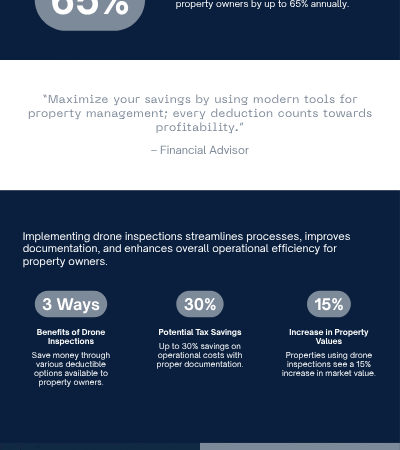
“Tax Deduction Checklist for Property Owners”
📘 Downloadable PDF Lead Magnet (title: “How to Write Off Drone Inspections as a Business Expense”)
Includes:
- IRS references (Pub 946, Pub 535)
- Simple examples: casualty loss, maintenance, depreciation
- QR link to book inspection
📘 How to Write Off Drone Inspections as a Business Expense
A Quick Guide by Aerial Inspections, LLC
Inspect Smarter · Save Taxes · Stay Safe
inspectfromabove.com
1️⃣ Why Drone Inspections Qualify as a Deductible Expense
According to IRS Publication 535 (Business Expenses), deductible expenses must be ordinary and necessary for your trade or business.
Drone inspections meet both standards when used to document and protect income-producing property.
- Ordinary: Common and accepted in your industry
- Necessary: Helpful and appropriate for maintaining or producing income
Aerial documentation supports:
- Asset protection and maintenance planning
- Insurance claims and valuation
- Depreciation schedules and audit verification
In short: If your property helps generate revenue, keeping it inspected and documented is a deductible necessity.
2️⃣ Three Ways Drone Inspections Save You Money
1. Operating Expense Deduction
Inspection fees are fully deductible in the year they’re paid—just like other professional services.
Example:
A business prepays $2,000 for annual inspections before December 31.
That prepayment reduces this year’s taxable income while securing next year’s coverage.
2. Depreciation Documentation
Each report provides visual evidence of property condition, enabling your CPA to:
- Track asset wear and deterioration
- Adjust depreciation schedules accurately
- Substantiate deductions if audited
See IRS Publication 946 – “How to Depreciate Property.”
3. Casualty Loss & Insurance Support
Timestamped aerial imagery provides “before and after” proof for storm, fire, or accident claims—helping you:
- Strengthen casualty-loss filings
- Accelerate insurance approvals
- Avoid underpayment disputes
See IRS Publication 547 – “Casualties, Disasters, and Thefts.”
3️⃣ The Smart Move: Prepay Your Retainer
Lock in preferred rates and priority service while gaining an immediate tax deduction.
Prepaid retainers qualify as an ordinary business expense in the year paid.
Pro Tip:
Prepay before year-end to reduce taxable income and guarantee post-storm inspection availability.
4️⃣ Example Scenarios
| Client Type | Tax Benefit | Example |
|---|---|---|
| Commercial Landlord | Expense deduction + depreciation tracking | Documents wear for Schedule E and insurance reconciliation |
| HOA / Property Manager | Shared deduction via reserve fund | Collective expense lowers group liability |
| Small Business Owner | Casualty loss proof | Baseline imagery simplifies insurance claims |
| CPA / Firm Client | Audit-ready records | Visual evidence supports depreciation adjustments |
5️⃣ Keep These Documents on File
Maintain a complete audit trail by saving:
- Inspection Report (PDF)
- Drone Photos / Videos
- Invoice or Retainer Receipt
Together, these verify asset management and deduction legitimacy.
6️⃣ Quick Summary
✅ 100% deductible as a business operating expense
✅ Supports depreciation and maintenance tracking
✅ Strengthens insurance and casualty claims
✅ Year-end retainers offer tax advantages
✅ Safer, faster, and more precise than manual inspections
Aerial Inspections, LLC
FAA Part 107 Certified Drone Operations
📧 support@inspectfromabove.com | 🌐 inspectfromabove.com
This guide is for informational purposes only and is not intended as tax or legal advice.
Always consult a licensed CPA regarding your specific situation.