
TL;DR — Executive Summary
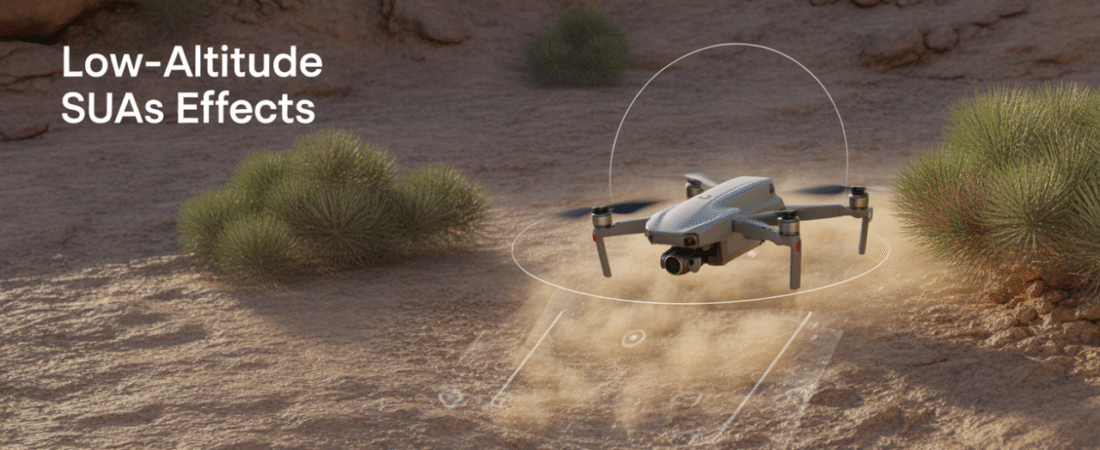
Small Unmanned Aerial Systems (sUAS) can introduce significant, yet often overlooked, ecological impacts when operated near the ground. During takeoff, landing, and low-altitude maneuvering, rotor wash generates localized “micro-gale” forces that mobilize dust and debris, exceed erosion thresholds, destabilize pollinators, and physically damage fragile surface habitats, nests, and burrows. These acute effects scale with payload, rotor size, and throttle demand.
Long-term impacts stem from infrastructure supporting repeated UAS operations—landing pads, charging hubs, and staging sites—which compact soils, alter infiltration, disturb vegetation, and create localized thermal micro-islands from active battery cooling systems. These temperature and hydrological shifts disrupt soil microclimates critical to small fauna and microbial communities.
Mitigation requires:
• Engineered landing pads (preferably elevated / porous)
• Minimum safe altitudes based on measured vertical velocity vs. substrate erosion thresholds
• Short flight windows to minimize wildlife stress
• Sensitive siting of infrastructure away from critical habitats
• Battery-hub thermal management
A comprehensive ecological assessment must accompany any regular UAS activity, integrating aerodynamic modeling, soil/vegetation surveys, and species-specific buffer protocols.
Chapter 1: Introduction: The Ecological Interface of Small UAS Technology
The global proliferation of Small Unmanned Aerial Systems (SUAVs), commonly known as drones, has spurred significant advancements across industry and research, including critical applications in environmental monitoring, agriculture, and logistics.1 While SUAVs are often lauded for their capacity to gather high-resolution information in remote areas with minimal human interference, a rigorous, mechanistic assessment of their environmental externalities is essential.3 This report moves beyond established concerns regarding noise and visual disturbance to analyze the acute physical effects of low-altitude operations, specifically rotor wash and dust mobilization, on small mammals, reptiles, and pollinator populations. Furthermore, it details the chronic environmental consequences associated with the necessary ground infrastructure, such as frequent drone hubs and recharging stations, focusing on localized vegetation and soil microclimate alterations.
The primary area of concern centers on Takeoff and Landing (TOL) or low-altitude flight maneuvers where the Propeller-Induced Flow (PIF), or rotor wash, directly interfaces with the ground surface and proximate biota.4 This operational regime introduces kinetic and thermal energy into the immediate environment, creating highly localized disturbances. A critical challenge for environmental stewardship involves reconciling the benefit of high-resolution data collection for conservation purposes—which drones facilitate by minimizing human presence 1—with their inherent capacity to act as a source of disturbance. The potential for acute physical harm or cumulative chronic stress resulting from drone operations requires a careful, quantified risk assessment to ensure that the collection of data does not compromise conservation goals.3 This necessity for ethical and technically informed decision-making forms the foundational framework for this analysis.
Chapter 2: The Aerodynamic Mechanics of Rotor Wash and Ground Interaction
2.1. Aerodynamic Principles of Downwash in Ground Effect (GE)
Multi-rotor drone platforms generate downwash in a manner analogous to conventional rotorcraft, characterized by a concentrated stream of high-velocity airflow directed vertically downwards.4 The operation near the surface invokes the aerodynamic phenomenon known as Ground Effect (GE), which occurs when an air vehicle hovers or flies in close vicinity to a solid surface.5 GE fundamentally alters the rotor wash characteristics, impacting airflow efficiency and often diminishing flight stability, a negative factor particularly relevant during precise landing maneuvers.5
Research has explored engineering solutions to mitigate the negative consequences of GE. For instance, the testing of landing platforms with grid surfaces has demonstrated a measurable reduction in GE, achieving a 13% improvement compared to solid surfaces.5 Utilizing such porous platforms helps stabilize the aircraft during landing while potentially reducing the turbulent energy reflected back toward the rotors. However, the efficacy of this design is highly sensitive to the presence of an underlying solid surface. To maintain the aerodynamic benefit of the grid, the distance between the grid and the surface below must be maintained at a minimum of two times the rotor diameter (2D).5 This engineering solution offers a pathway to minimize instability and, critically, reduce the localized kinetic interaction between the rotor system and the ground environment.
2.2. Quantification of Vertical Downward Velocity (VVD)
The Vertical Downward Velocity (VVD) serves as the most direct quantification of the kinetic energy transferred by the rotor wash to the ground environment and any terrestrial biota within the disturbance zone. The intensity of this downwash is heavily dependent upon the operational parameters of the UAS, particularly payload weight, which dictates the required rotor speed.
Studies on UAV sprayers confirm that the VVD is highly sensitive to load. For instance, when the load of a UAV sprayer was reduced significantly, from 16 kg to 4 kg, the corresponding rotor speed dropped by approximately 30% while hovering.6 This reduction in power input resulted in the maximum VVD on the horizontal detection surface dropping by approximately 23%.6 These data underscore that industrial-grade, heavy-payload drones used in applications such as agriculture or logistics generate significantly stronger downwash forces, leading to a much higher potential for localized disturbance than lighter consumer or inspection models.
Beyond the immediate under-rotor region, the propeller-induced flow (PIF) creates a measurable and significant disturbance zone. Detailed measurements using lidar and sonic anemometers, often validated by Computational Fluid Dynamics (CFD) simulations, characterize the flow field distortion. For a rotary-wing drone with a rotor diameter (D) of 0.71 meters, the disturbance zone for the vertical wind velocity extends more than 7D below the drone.7 Furthermore, velocity profiles indicate that even at horizontal distances of 10D (approximately 7 meters from the centerline), a PIF greater than 4 meters per second was still observed along the center of the downwash for moderate throttle settings (35% and 45%).8
This persistent, high-velocity airflow far downstream characterizes drone operations as generating a transient micro-gale event near ground level. A velocity exceeding 4 meters per second is substantial in the context of terrestrial ecology, potentially exceeding the structural integrity limits of small animal nests or cryptic habitats.9 Unlike regional ambient winds, which typically have a higher velocity gradient with height and a horizontal profile, this drone-induced force is concentrated and directed vertically downward, presenting a localized destructive force that ground-dwelling species are poorly equipped to withstand.
2.3. Threshold Analysis for Sediment and Dust Mobilization
The mobilization of surface material—dust, sand, small rocks, and debris—is an inevitable consequence of the high-velocity rotor wash during TOL.10 This kinetic energy transfer is the primary source of environmental pollution from drone operation (fugitive dust) and poses mechanical risks to the drone itself, including motor contamination and damage to sensitive components like gimbals or lenses.10
In soil science, the initiation of sediment transport (saltation) requires the local wind speed to exceed a critical shear velocity threshold, which is intrinsic to the characteristics of the surface material (e.g., grain size, moisture content, cohesiveness).11 While soil science provides established methods for rapidly determining this threshold under natural wind conditions 11, specific empirical data correlating drone VVD profiles to the erosion thresholds of various ecological substrates remain a gap in current published protocols.
Best management practices for minimizing dust mobilization, derived from construction and land management guidelines, strongly emphasize preventative measures.12 These practices include implementing a robust dust control plan, using soil stabilizers, mulch, or temporary gravel cover, and consolidating construction activities to previously disturbed or unvegetated areas.12 The necessity for such analogous mitigation strategies reinforces the conclusion that engineered landing platforms are essential for drone operations over sensitive, unpaved terrain.
Table 1: Aerodynamic Downwash Characteristics and Ground Disturbance Parameters
| Parameter | Observation/Measurement | Ecological Significance |
| Max VVD (Low Alt.) | $>4$ m/s measured at 10D distance from centerline (35–45% throttle) | High risk of physical displacement and initiation of localized erosion (transient micro-gale). |
| VVD vs. Payload | Max VVD drops $\sim 23 \%$ when load changes from 16 kg to 4 kg. | Heavier, industrial drones pose a disproportionately higher physical threat to ground environments. |
| Ground Effect Mitigation | Grid surface reduces GE by $13 \%$ vs. solid surface; requires 2D clearance from below. | Landing infrastructure can substantially mitigate physical disruption and improve flight stability. |
| Erosion Initiation | Dependent on the critical wind speed threshold required for saltation activity. | VVD exceeding this material-specific threshold leads to immediate dust mobilization and soil loss. |
Chapter 3: Acute Impacts on Terrestrial Fauna (Small Mammals and Reptiles)
3.1. Behavioral and Physiological Stressors
For small mammals and reptiles, the primary initial impact of SUAV operations manifests through sensory stimulation—noise, visual cues, and the sudden onset of strong airflow—leading to behavioral and physiological responses. Research indicates that wildlife responses, including increased vigilance, flight responses, or physiological stress, are heavily influenced by operational variables such as drone altitude, speed, and approach distance.3 The environmental context and visual perception of the drone also modulate species detection and disturbance thresholds.2
The effects are often disproportionate for smaller species, which perceive changes in their environment at finer spatial scales. Studies of small mammals, such as Mexican woodrats, highlight how movement patterns are influenced by microhabitat selection, risk perception, and the structural composition of the environment.13 For instance, woodrats utilize features like logs that offer auditory concealment and ease of travel. They also show shorter step lengths in areas with increased bare ground.13
Since small mammals actively select habitats for auditory concealment, the persistent, high-frequency noise signature produced by multi-rotor drones, even at altitudes considered safe from physical impact, can dramatically increase the perceived predation risk across a wide area. This chronic auditory disruption effectively eliminates potential safety zones (e.g., logs or dense cover) for the animal, leading to cumulative stress that can disrupt essential population-level processes like foraging and breeding cycles.3 Although short-term behavioral changes are often documented, the long-term, cascading consequences of repeated drone exposure and subsequent chronic stress remain poorly known.3 Ethical guidelines recommend limiting observation periods to brief sessions, typically 10–15 minutes, to allow animals to rapidly return to their normal behavior, thus mitigating prolonged effects of stress.3
3.2. Physical Damage and Habitat Disruption
The direct physical force of rotor wash poses a palpable risk to ground-dwelling fauna, specifically affecting the integrity of their nests, burrows, and shelters. Historical studies involving conventional rotorcraft (helicopters) established that powerful downwash can move large debris and physically damage smaller nests located in open areas or brushy habitats near landing sites.9
For reptiles and small mammals that rely on ground-level burrows, shallow nests, or cryptic cover for protection, direct exposure to the high VVD generated during low-altitude maneuvers introduces two critical physical risks:
- Structural Failure: Downwash can exert sufficient kinetic force to structurally compromise or displace fragile surface nests or shallow covers, leading to exposure or injury.
- Ablation and Contamination: The high-velocity airflow can erode the soil immediately surrounding burrow entrances, potentially exposing subterranean clutches (eggs) or young, or driving mobilized dust, sand, and fine debris directly into refuge openings.
Ethical considerations mandate that physical harm caused to animals is unequivocally unacceptable, irrespective of the conservation value or data collection goals.3 Mitigation requires strict adherence to flight protocols that prioritize wildlife welfare, including the use of biomimetic designs, where feasible, and maintaining optimal altitudes and ranges based on species-specific behavioral thresholds.3
Chapter 4: Impacts on Pollinator Populations and Insect Flight Dynamics
4.1. The Critical Role of Turbulence in Insect Flight
Flying insects, including critical pollinator populations, operate within the atmospheric boundary layer where small-scale turbulence is ubiquitous. Unlike larger, fixed-wing aircraft, small multi-rotor SUAVs generate turbulent wakes and vortex shedding that directly overlap with the functional airspace of these insects.
The flight performance of insects is fundamentally limited by environmental turbulence, even in natural settings where airflow is generally considered stable.14 Due to their small scale, insects operate at low Reynolds numbers and are highly susceptible to variability in external airflow. This aerodynamic vulnerability means that the highly turbulent, localized flow fields produced by drone rotors during low-altitude operations represent a unique and severe environmental hazard.
4.2. Quantification of Turbulence-Driven Performance Degradation
Empirical studies on natural flyers, such as wild orchid bees, demonstrate that turbulence causes severe instabilities, particularly concerning the roll axis, thereby limiting maximum attainable flight speed.14 To counteract this loss of stability, bees instinctively extend their hindlegs ventrally, a posture that, while improving roll stability, significantly increases body drag and necessitates a substantial increase in associated power requirements—by up to 30%.15 Furthermore, in severely turbulent air, insects like bumblebees have been documented as being highly prone to critical loss of roll stability, often leading to a crash if the roll velocity threshold is exceeded.15
The consequence of this turbulence is an energetic depletion mechanism that acts as an invisible environmental friction multiplier. The 30% increase in power required simply to maintain stability in a turbulent field means that rotor-induced turbulence near foraging or nesting areas directly imposes an uncompensated caloric tax on the pollinator.15 This depletion significantly reduces the effective foraging lifespan or range of the insect. Thus, repeated exposure to turbulent wash near ecologically critical zones, even in the absence of direct physical collision, translates to premature caloric exhaustion and reduced overall fitness, yielding a substantial, cumulative ecological cost to pollination success.
4.3. Mitigation via Biomimetics and Flight Protocols
The environmental and operational challenges posed by turbulence have spurred research into biomimetic design. Inspired by the sophisticated flying mechanisms and robustness of aerial animals, researchers are developing new wing designs and flight control technologies aimed at achieving enhanced flight stability in turbulent conditions while minimizing environmental impact.16 For instance, novel fixed-wing designs for small drones, inspired by insect and bird wing leading edges, have been shown to be far more stable and efficient in sudden gusts and turbulent air than standard contoured wings.17
Operationally, the management of rotor wash intensity and distribution is necessary for minimizing disturbance. In applications like aerial spraying, the downwash is intentionally utilized to improve the uniformity and deposition characteristics of liquid droplets.18 For a specific plant protection UAV, the optimal flight height was determined to be 2.0 meters, which maximized the beneficial influence of the downwash on droplet distribution.18 However, this operational optimization for agricultural efficacy must be rigorously balanced against the established thresholds for ecological disturbance to sensitive fauna, ensuring that commercial efficiency does not inadvertently amplify environmental impact.
Table 2: Ecological Impact Matrix of Low-Altitude Operations
| Taxonomic Group | Primary Acute Stressor | Acute Response | Observed/Inferred Impact Mechanism |
| Pollinators/Insects | Rotor Turbulence/Vortex Shedding | Severe flight instability, crash risk, reduced speed/efficiency. | $30 \%$ increase in power required for stability; roll axis control failure; premature energetic depletion. |
| Small Mammals | Noise, Visual Threat, Air Vibration | Vigilance, Flight, Avoidance of open areas. | Increased perceived predation risk due to acoustic disruption of auditory concealment; cumulative physiological stress. |
| Reptiles/Ground Dwellers | Dust Mobilization, Direct Wind Force | Displacement, Nest/Burrow damage, respiratory stress. | VVD exceeds kinetic threshold for habitat structural integrity; ablation of protective soil cover. |
Chapter 5: Chronic Environmental Footprint of Ground Infrastructure (Hubs and Stations)
5.1. Soil Compaction and Erosion
The establishment of permanent infrastructure for high-frequency drone operations, such as VTOL (Vertical Takeoff and Landing) pads, recharging hubs, and storage facilities, introduces chronic impacts on the local landscape. The necessity for stabilized landing zones and adjacent utility areas means that these structures share environmental risks analogous to light aircraft pavements, specifically regarding soil structural integrity.19
The construction and hardening of these sites introduce several negative factors related to soil physics. These include poor soil compaction, increased soil erosion, reduced water infiltration beneath the paved surface, and the potential development of subsurface voids or settlement of backfill materials.19 These changes alter the hydrological cycle of the immediate area and can lead to secondary erosion effects at the periphery of the hardened pad.
The establishment of these hubs necessitates minimizing land clearing and avoiding sensitive habitats. Best practices require that construction and deployment steer clear of high-quality habitats (such as woodlots and wetlands), unique habitats (shorelines), and sensitive native vegetation.12 Instead, infrastructure should be consolidated, utilizing existing roads or previously disturbed, unvegetated areas to reduce vegetation loss.12 While multispectral analysis is used to hypothesize that severely compacted soils negatively affect plant growth, the direct, visually discernible impacts near compacted tracks are not always statistically significant, suggesting subtle long-term effects on vegetation health that require detailed index analysis to detect.20
5.2. Thermal Footprint and Soil Microclimate Alterations
A distinct chronic environmental consequence of automated drone hubs is the persistent thermal footprint generated by energy transfer systems. Modern multi-rotor drones rely primarily on high-energy-density Lithium-ion (Li-ion) and Lithium Polymer (Li-Po) batteries.21 These batteries generate substantial waste heat during both high-rate discharging (flight) and rapid charging cycles.21
To ensure operational safety and battery longevity, preventing thermal runaway—a dangerous chain reaction leading to uncontrollable temperature spikes and potential fires—requires sophisticated thermal management.21 Industrial, high-throughput charging stations often employ advanced systems, including liquid-cooled components, designed to rapidly dissipate heat from batteries after use and optimize subsequent charging cycles.22
The continuous and concentrated heat rejection necessary for maintaining these systems creates a persistent, localized thermal anomaly—a micro-heat island—in the immediate vicinity of the hub infrastructure. This concentrated waste heat is ejected into the surrounding air and ground environment, raising the thermal gradient near the soil surface. Since the soil microclimate—the localized atmospheric conditions experienced by the upper soil layers and interface—is critical for seed germination, nutrient cycling mediated by microbial communities, and the hibernation cycles of subsurface fauna, a chronic, elevated thermal regime can fundamentally disrupt these processes. By increasing soil moisture evaporation rates and altering microbial metabolism, the thermal footprint represents a novel, long-term impact unique to permanent, powered UAS infrastructure, potentially selecting against temperature-sensitive local species and altering the stability of the local ecosystem.
Table 3: Chronic Ground Infrastructure Impacts and Mitigation
| Impact Source | Environmental Effect | Mitigation Strategy (Analogous/Direct) |
| Ground Structure | Reduced water infiltration, erosion risk, subsurface compaction. | Siting on existing disturbed areas; minimizing land clearing; avoiding high-quality habitats. |
| High-Frequency TOL | Dust mobilization, abrasion of sensitive equipment/ground surfaces. | Mandatory use of specialized, portable, or permanent landing pads (e.g., polymer, grid-surfaced). |
| Charging Station | Localized Thermal Plume (Micro-Heat Island). | Use of optimized liquid-cooled thermal management; careful siting to direct heat rejection away from sensitive soil microclimates. |
Chapter 6: Mitigation Strategies and Best Practice Guidelines
The evidence necessitates a comprehensive approach to mitigating both acute and chronic impacts stemming from SUAV operations and infrastructure.
6.1. Minimizing Rotor Wash and Dust Mobilization
The most effective strategy for managing rotor wash kinetic energy and debris kick-up is the mandatory use of specialized landing pads. These platforms, often made of durable, waterproof materials, are essential for pollution protection, preventing dust, sand, and small rocks from being drawn into the drone’s motors or damaging downward-facing sensors and gimbals.10 For operations over highly sensitive terrain, the deployment of grid-surfaced platforms is recommended. As noted in the aerodynamic analysis, such platforms offer the dual benefit of reducing Ground Effect for improved flight stability and minimizing debris mobilization compared to solid surfaces.5 Operators must ensure the platform maintains the necessary clearance (2D) above any underlying solid surface to maximize this effect.5
Furthermore, standardizing operational protocols for VVD control is crucial. This involves establishing minimum safe altitudes for TOL based on measured VVD profiles 8 relative to the known wind erosion threshold (saltation limit) of the specific soil or substrate at the landing site.11 Dynamic mission planning should incorporate site-specific erosion potential to prevent transient gale events.
6.2. Strategies for Wildlife Disturbance Reduction
To minimize psychological and physiological stress on terrestrial fauna, adherence to strict temporal protocols is mandatory. Operators should limit flight sessions to short durations, typically not exceeding 10–15 minutes, to mitigate cumulative stress and allow for rapid return to normal behavioral patterns.3
Crucially, flight parameters (altitude, speed, noise level) must be adapted based on species-specific sensitivity and the acoustic properties of the habitat. Higher minimum altitudes are necessary in open habitats where noise dampening is low, while flight paths should avoid known critical zones (e.g., breeding grounds or feeding areas).3 Technological mitigation should prioritize the deployment of quieter drone models and continue research into biomimetic designs that aim to lower both noise footprint and perceived visual threat to wildlife.3
6.3. Sustainable Siting and Management of Hub Infrastructure
The primary mitigation strategy for chronic infrastructure impacts lies in meticulous, preventative siting. Deployment of permanent hubs must be integrated with environmental sensitivity mapping, enforcing strict avoidance of high-quality habitats, unique ecological features, and native vegetation zones.12
When siting is unavoidable in proximity to sensitive areas, the infrastructure must be consolidated. Land clearing and vegetation disturbance must be minimized by prioritizing collocation and the use of existing, previously disturbed areas or rights-of-way.12 For charging stations, thermal management systems must be designed to direct waste heat away from the ground interface, potentially utilizing centralized liquid-cooling systems and optimizing heat rejection in a manner that prevents the persistent elevation of soil temperature in areas supporting subsurface biota.21
Chapter 7: Conclusions, Critical Research Gaps, and Recommendations
7.1. Synthesis of Key Ecological Risks
The integration of small UAS technology into environmental and commercial operations presents quantified acute and chronic ecological risks that require proactive management.
The acute risk is driven by the Propeller-Induced Flow (PIF) during low-altitude operations, particularly from heavy-payload drones, which generates transient micro-gale events. Measured Vertical Downward Velocities (VVD) exceeding 4 meters per second at distances of 10 rotor diameters from the center of the downwash confirm the potential to initiate sediment erosion (dust/saltation) and cause direct physical damage to ground-level habitats.8 For pollinator populations, the resultant air turbulence imposes a significant energetic cost, demanding up to a 30% increase in power expenditure simply to maintain flight stability, leading to reduced fitness and limited foraging capacity.15
The chronic risk is intrinsically linked to the supporting ground infrastructure. The requirement for hardened landing pads poses a risk of localized soil compaction and hydrological disruption.19 More fundamentally, the high-throughput, rapid charging systems necessary for continuous operation generate substantial waste heat. If not rigorously managed, the continuous heat rejection from liquid-cooled stations creates a persistent thermal anomaly—a micro-heat island—that can critically alter soil microclimate and negatively impact temperature-sensitive subsurface flora and fauna.21
7.2. Critical Research Gaps and Recommendations
Based on the synthesis of current aerodynamic and ecological literature, four critical research gaps must be addressed to develop comprehensive environmental regulations:
- Quantitative VVD vs. Ecological Thresholds: There is a crucial absence of empirical data linking measured VVD profiles of standard commercial drones to site-specific soil erosion thresholds and the kinetic resistance of specific ecological structures (e.g., reptile egg clutches, small mammal burrows). Research must establish clear regulatory standards for maximum allowable vertical velocity at the ground interface for different habitat types.
- Long-term Chronic Stress and Reproductive Fitness: While short-term behavioral reactions are documented, the cumulative stress resulting from repeated drone exposure and its subsequent effects on the long-term reproductive success, foraging behavior stability, and population dynamics of small mammals and reptiles require dedicated, multi-year field studies.3
- Thermal Footprint Characterization: Comprehensive field measurements are necessary to quantify the spatial extent, magnitude, and persistence of thermal plumes generated by industrial, high-throughput charging stations. Modeling should assess the consequential impacts on soil moisture and subsurface microbial communities to inform siting and engineering requirements.21
- Pollinator Recovery and Distance Thresholds: Research must move beyond descriptive behavioral observation to quantitatively define the minimum safe distance and altitude required to minimize rotor turbulence effects on pollinators, providing data to optimize flight parameters specifically to reduce the energetic cost imposed on flying insects.15
7.3. Policy Integration and Operational Recommendations
To minimize ecological footprint, policy and operational guidelines must be immediately updated:
- Mandate Engineered Landing Pads: Require the use of specialized, elevated, and ideally grid-surfaced landing pads for all operations over unpaved, sensitive terrain to control debris mobilization, minimize erosion, and stabilize aircraft operations.5
- Enforce Ecological Zoning: Integrate environmental sensitivity mapping into all UAS hub deployment planning, strictly prohibiting infrastructure siting within designated high-quality habitats (e.g., wetlands, native plant reserves).12
- Implement Dynamic VVD Protocols: Establish protocols that mandate the calculation of the minimum required operational altitude (MSA) for TOL based on real-time assessment of local ground conditions and the known maximum VVD output of the specific UAS model, ensuring VVD remains below predetermined environmental erosion thresholds.
Works cited
- How to Use Drones for Wildlife Conservation? – JOUAV, accessed November 5, 2025, https://www.jouav.com/blog/wildlife-drone.html
- Impact of Drone Disturbances on Wildlife: A Review – ResearchGate, accessed November 5, 2025, https://www.researchgate.net/publication/390865210_Impact_of_Drone_Disturbances_on_Wildlife_A_Review
- Impact of Drone Disturbances on Wildlife: A Review – MDPI, accessed November 5, 2025, https://www.mdpi.com/2504-446X/9/4/311
- Experimental Investigation of Rotorcraft Outwash in Ground Effect – NASA Technical Reports Server, accessed November 5, 2025, https://ntrs.nasa.gov/api/citations/20160006428/downloads/20160006428.pdf
- Ground Effect on a Landing Platform for an Unmanned Aerodynamic System, accessed November 5, 2025, https://openaccess-api.cms-conferences.org/articles/download/978-1-958651-69-8_7
- WSPM-System: Providing Real Data of Rotor Speed and Pitch Angle for Numerical Simulation of Downwash Airflow from a Multirotor UAV Sprayer – MDPI, accessed November 5, 2025, https://www.mdpi.com/2077-0472/11/11/1038
- Rotary-wing drone-induced flow – comparison of simulations with lidar measurements – DTU Research Database, accessed November 5, 2025, https://orbit.dtu.dk/files/360163336/Rotary-wing_drone-induced_flow_comparison_of_simulations_with_lidar_measurements.pdf
- Experimental Characterization of Propeller-Induced Flow (PIF) below a Multi-Rotor UAV, accessed November 5, 2025, https://www.mdpi.com/2073-4433/15/3/242
- Wildlife And Aircraft Operation: Assessment Of Impacts, Mitigation And Recommendations For Best Management Practices in the Pea – Gov.bc.ca, accessed November 5, 2025, https://www2.gov.bc.ca/assets/gov/environment/plants-animals-and-ecosystems/wildlife-wildlife-habitat/regional-wildlife/northeast-region/best-mgmt-practices/aircraft_operations_wildlife_mitigation_report.pdf
- Drone Landing Pad: How to Choose the Best One in 2025? – Skylum, accessed November 5, 2025, https://skylum.com/blog/drone-landing-pads
- A METHOD FOR ESTABLISHING THE CRITICAL THRESHOLD FOR AEOLIAN TRANSPORT IN THE FIELD – USDA ARS, accessed November 5, 2025, https://www.ars.usda.gov/ARSUserFiles/30960515/Stout_pubs/Stout_2004_ESPL_Threshold.pdf
- Best Management Practices (BMP) and Mitigation Measures, accessed November 5, 2025, https://dom.iowa.gov/media/841/download?inline
- Movement response of small mammals to burn severity reveals importance of microhabitat features – PMC – PubMed Central, accessed November 5, 2025, https://pmc.ncbi.nlm.nih.gov/articles/PMC11647521/
- Turbulence-driven instabilities limit insect flight performance – PMC – NIH, accessed November 5, 2025, https://pmc.ncbi.nlm.nih.gov/articles/PMC2690035/
- Turbulence-driven instabilities limit insect flight performance – ResearchGate, accessed November 5, 2025, https://www.researchgate.net/publication/24442464_Turbulence-driven_instabilities_limit_insect_flight_performance
- Review of Biomimetic Approaches for Drones – MDPI, accessed November 5, 2025, https://www.mdpi.com/2504-446X/6/11/320
- Researchers develop new bio-inspired wing design for small drones – Brown University, accessed November 5, 2025, https://www.brown.edu/news/2020-01-29/wings
- Influence of the Downwash Wind Field of Plant Protection UAV on Droplet Deposition Distribution Characteristics at Different Flight Heights – MDPI, accessed November 5, 2025, https://www.mdpi.com/2073-4395/11/12/2399
- NOVEL INFRASTRUCTURE MONITORING USING … – CORE, accessed November 5, 2025, https://core.ac.uk/download/635585123.pdf
- Cutting-edge drone technology used to investigate plant health and soil compaction in the SoilCompaC project, accessed November 5, 2025, https://projects.au.dk/ejpsoil/about-ejp-soil/news-events-newsletters/item/artikel/cutting-edge-drone-technology-used-to-investigate-plant-health-and-soil-compaction-in-soilcompac-project
- Why Extreme Temperature Performance in Drone Batteries Matters? – Trydan Tech, accessed November 5, 2025, https://www.trydantech.com/newsroom/why-extreme-temperature-performance-in-drone-batteries-matters
- Thermal Management for Unmanned Aerial Vehicle Payloads: Mechanisms, Systems, and Applications – MDPI, accessed November 5, 2025, https://www.mdpi.com/2504-446X/9/5/350
3 Tips For Perfect Landings – YouTube, accessed November 5, 2025, https://www.youtube.com/watch?v=QKAAovYObZA